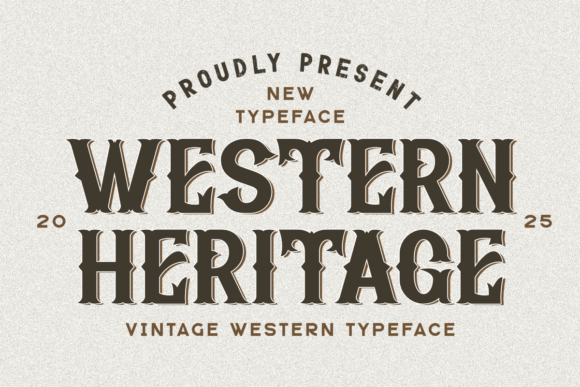
Western Heritage: Capturing Frontier Spirit in Modern Design
There's a certain weight to the American West—a sense of history, rugged individualism, and wide-open possibility. Western Heritage is a typeface that captures that feeling. It's not just a collection of letters; it's a design asset with character. As a vintage western font, it draws direct inspiration from classic logo typography, offering a distinct personality for projects that need to stand out. This isn't your standard serif font or sans serif font; it's a display font built for impact and storytelling.
At its core, Western Heritage features sturdy, slightly condensed letterforms. You'll notice strong vertical strokes, subtle wedge-shaped serifs, and often a weathered, textured edge that suggests age and authenticity. The overall style is bold and unapologetically Western, yet it maintains a level of refinement that keeps it from looking cartoonish. It’s a premium font that feels both nostalgic and surprisingly versatile in the right hands.
Where This Western Font Truly Shines
Understanding a font's ideal context is half the battle. Western Heritage isn't meant for body text in a novel or a corporate annual report. Its strength lies in headlines, logos, and branding elements where personality is paramount. Think of it as a creative font for specific, high-impact moments.
- Logo Design & Brand Identity: This is its sweet spot. For a craft brewery, a BBQ restaurant, a rugged outdoor apparel brand, or a vintage-themed shop, Western Heritage can form the cornerstone of a memorable logo. It instantly communicates a specific vibe and helps build a strong brand identity.
- Editorial & Packaging Design: Use it for magazine feature titles, chapter headings in a book about history, or on packaging for artisanal goods like hot sauce, whiskey, or leather goods. It adds instant shelf appeal and tells a story before the product is even opened.
- Digital & Social Media: In the world of social media graphics, grabbing attention in a split second is crucial. A bold header using Western Heritage on a blog post graphic or a YouTube thumbnail can stop the scroll. It works well for event posters, festival branding, and digital advertisements.
- Personal & Commercial Projects: From wedding invitations with a rustic theme to apparel design, watermarks on photography portfolios, or even game UI design, its applications are broad. Small business owners can use it for labels, business cards, and storefront signage to carve out a distinct niche.
Making the Font Work for Your Project
Choosing a typeface like Western Heritage is a strategic decision. It directly influences how your audience perceives your project. Used correctly, it can enhance readability in a headline context, establish a clear visual hierarchy, and project an image of authenticity and craftsmanship. It’s a tool for audience engagement—the right viewer will connect immediately with the style.
Practical Guidance for Designers and Creators
- Evaluate the Fit: Does your project's core message align with themes of heritage, craftsmanship, adventure, or rustic charm? If you're designing for a tech startup or a minimalist skincare line, this font is likely the wrong choice. Context is everything.
- Test Font Pairings: A display font like Western Heritage needs a partner. For body copy, pair it with a clean, highly legible sans serif font or a simple serif font. A pairing like Western Heritage with a font like Lato, Open Sans, or a classic Garamond creates balance and ensures your message is easy to read.
- Review All Included Styles: Many premium fonts come with more than just the regular weight. Check if Western Heritage includes bold, italic, or alternate character sets. These variations give you more tools for creating visual hierarchy and adding subtle nuance to your designs.
- Consider Readability at Scale: Always test the font at the size it will be used. A textured, vintage typeface can become illegible at very small sizes on a screen. Ensure your chosen style maintains clarity, especially for critical information like a business name or an event date.
- Understand the License: For any commercial project—whether it's for a client, for sale, or for your own business—verify the font's licensing. A legitimate commercial font license protects you and ensures the designer is fairly compensated, which supports the creation of more quality design assets.
In a landscape saturated with generic typography, a font with a clear point of view is a valuable asset. Western Heritage offers a bridge between the past and present, providing a tool for modern typography that doesn't forget its roots. It’s a typeface that doesn’t just spell words; it helps tell a story. For the right project, that story can be the difference between blending in and being remembered.